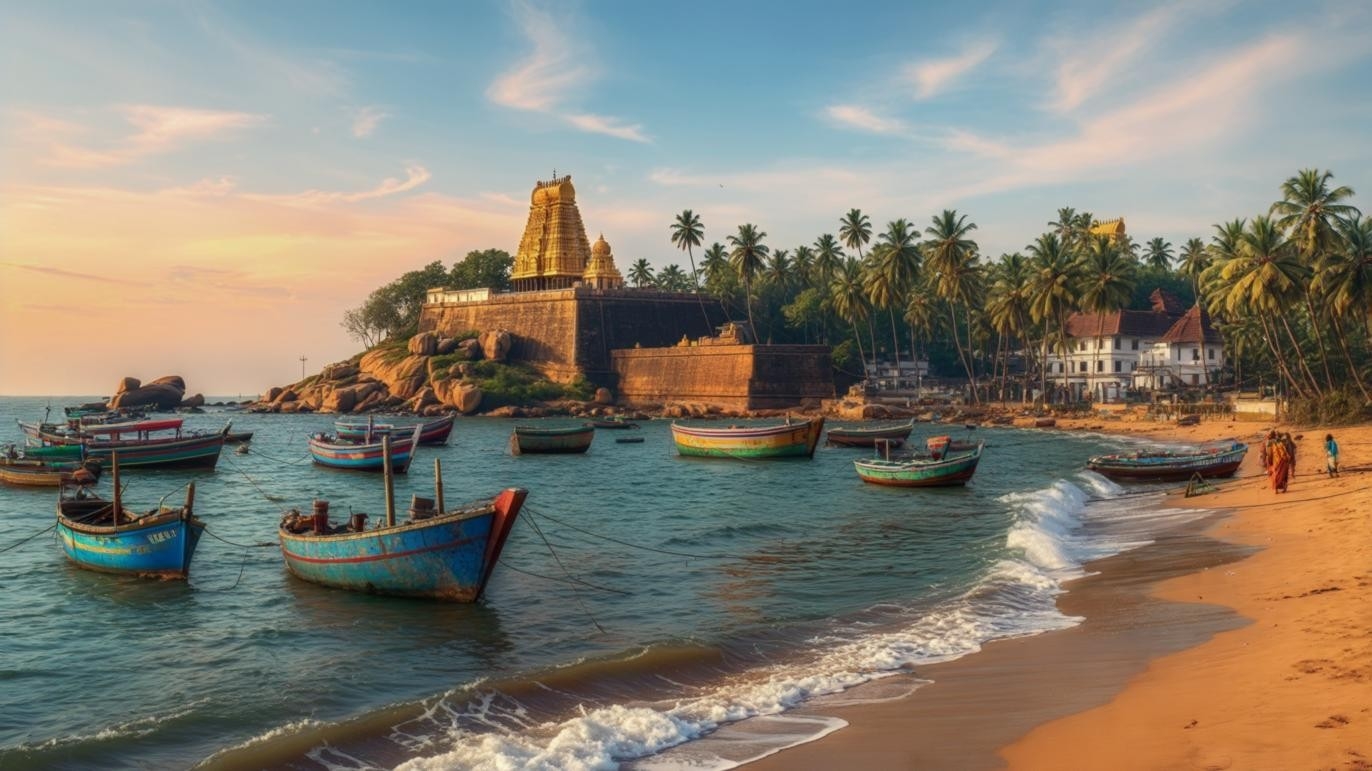
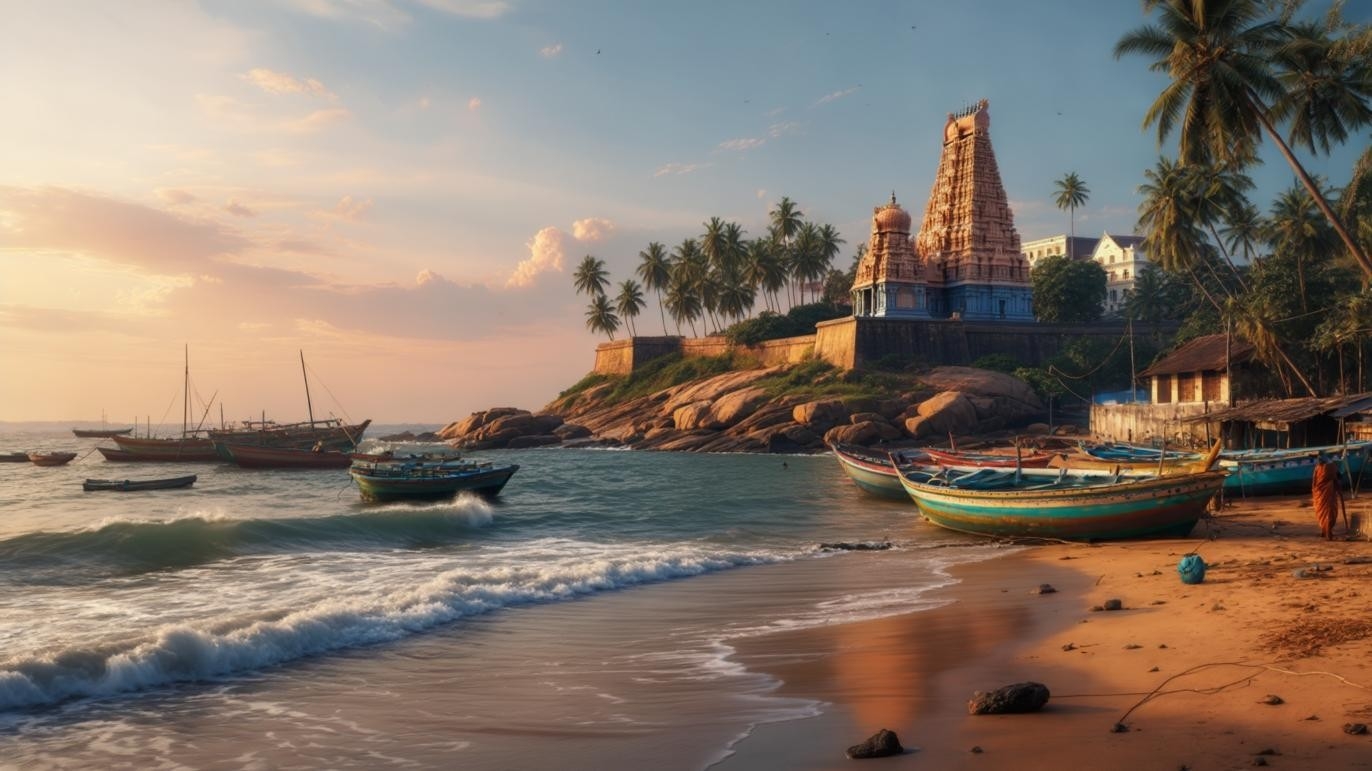
Trincomalee, often called "Trinco," is a vibrant port city on the northeastern coast of Sri Lanka, renowned for its deep natural harbor, pristine beaches, and rich cultural heritage. Located in the Eastern Province, it is one of the oldest cities in Asia, with a history spanning over 2,500 years. Its strategic location along ancient maritime trade routes has shaped its diverse cultural fabric, blending Tamil, Sinhalese, Muslim, and colonial influences.

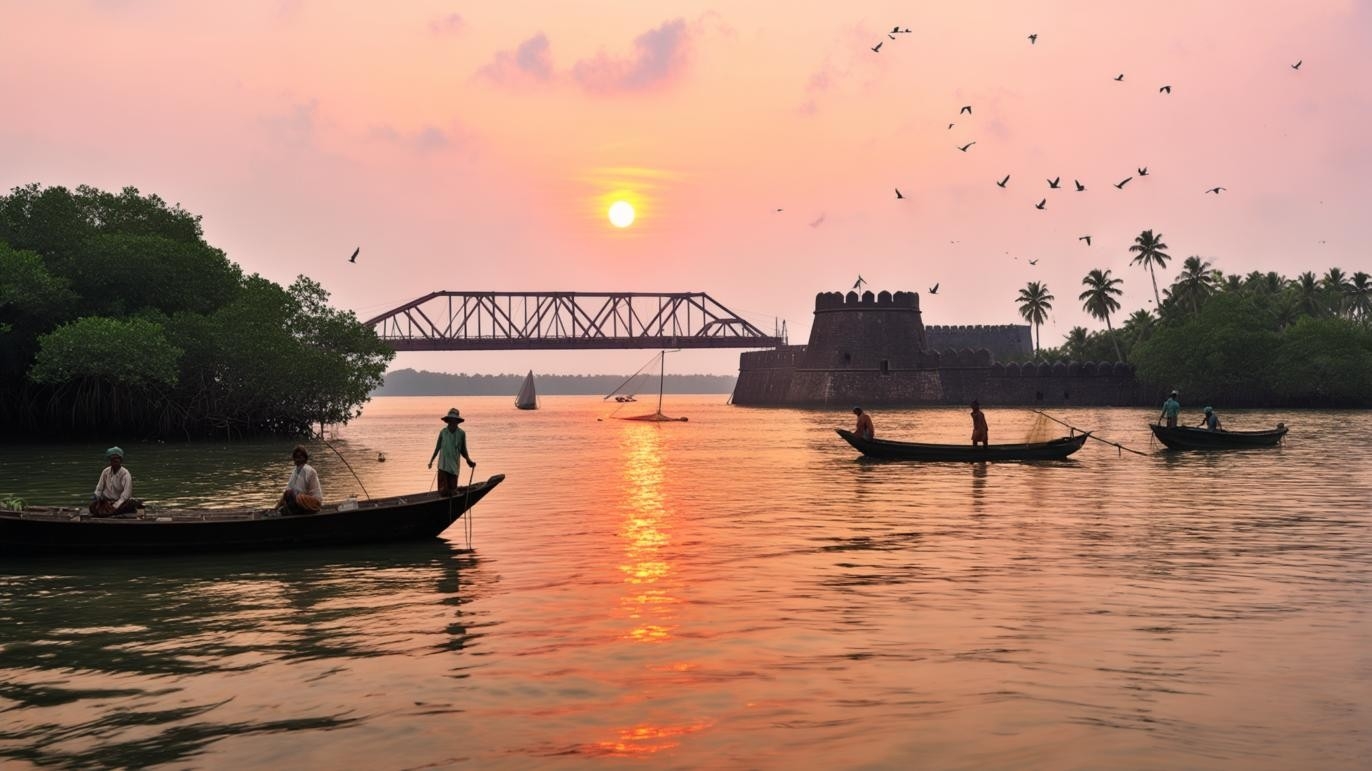
Trincomalee’s history is marked by its role as a key maritime hub. Ancient texts mention it as a sacred site, with the Koneswaram Temple, a revered Hindu shrine, dating back to at least the 4th century BCE. The city was a focal point for South Indian dynasties, Buddhist kingdoms, and later European colonial powers, including the Portuguese, Dutch, and British, who fortified the harbor. Fort Frederick, built by the Portuguese in 1624 and later expanded by the Dutch and British, stands as a testament to this colonial past.

The city is a melting pot of cultures and religions. The Koneswaram Temple, perched on Swami Rock, is a major pilgrimage site for Hindus, dedicated to Lord Shiva. Nearby, the Gokanna Vihara, an ancient Buddhist temple, highlights the city’s Buddhist heritage. Mosques and churches, such as the St. Mary’s Cathedral, reflect the Muslim and Christian communities. This diversity is celebrated in festivals like Maha Shivaratri and Vel festival, which draw locals and tourists alike.

Trincomalee boasts some of Sri Lanka’s most stunning beaches, including Nilaveli and Uppuveli, known for their golden sands and clear waters. Pigeon Island National Park, a short boat ride away, is a haven for snorkeling and diving, with vibrant coral reefs and marine life. The natural harbor, one of the world’s deepest, is a hub for whale watching, especially between March and August when blue whales and dolphins frequent the waters. Marble Beach and Lover’s Leap, a scenic cliff tied to a romantic legend, are other must-visit spots.

Today, Trincomalee is a growing economic center, with its port facilitating trade and tourism. The city is also home to a significant fishing industry and is a base for Sri Lanka’s navy. Recent developments aim to boost tourism, with eco-resorts and water sports gaining popularity. The city’s warm climate, with temperatures averaging 28–32°C, makes it a year-round destination, though the dry season (May to September) is ideal for visitors.

Trincomalee is a city where history, culture, and nature converge. Its ancient temples, colonial forts, and breathtaking coastline make it a unique destination. Whether you’re a history enthusiast, a beach lover, or an adventure seeker, Trincomalee offers a captivating blend of experiences, embodying the soul of Sri Lanka’s eastern shores.

image

Trincomalee, often called "Trinco," is a vibrant port city on the northeastern coast of Sri Lanka, renowned for its deep natural harbor, pristine beaches, and rich cultural heritage. Located in the Eastern Province, it is one of the oldest cities in Asia, with a history spanning over 2,500 years. Its strategic location along ancient maritime trade routes has shaped its diverse cultural fabric, blending Tamil, Sinhalese, Muslim, and colonial influences.

Trincomalee’s history is marked by its role as a key maritime hub. Ancient texts mention it as a sacred site, with the Koneswaram Temple, a revered Hindu shrine, dating back to at least the 4th century BCE. The city was a focal point for South Indian dynasties, Buddhist kingdoms, and later European colonial powers, including the Portuguese, Dutch, and British, who fortified the harbor. Fort Frederick, built by the Portuguese in 1624 and later expanded by the Dutch and British, stands as a testament to this colonial past.

The city is a melting pot of cultures and religions. The Koneswaram Temple, perched on Swami Rock, is a major pilgrimage site for Hindus, dedicated to Lord Shiva. Nearby, the Gokanna Vihara, an ancient Buddhist temple, highlights the city’s Buddhist heritage. Mosques and churches, such as the St. Mary’s Cathedral, reflect the Muslim and Christian communities. This diversity is celebrated in festivals like Maha Shivaratri and Vel festival, which draw locals and tourists alike.

Trincomalee boasts some of Sri Lanka’s most stunning beaches, including Nilaveli and Uppuveli, known for their golden sands and clear waters. Pigeon Island National Park, a short boat ride away, is a haven for snorkeling and diving, with vibrant coral reefs and marine life. The natural harbor, one of the world’s deepest, is a hub for whale watching, especially between March and August when blue whales and dolphins frequent the waters. Marble Beach and Lover’s Leap, a scenic cliff tied to a romantic legend, are other must-visit spots.

Today, Trincomalee is a growing economic center, with its port facilitating trade and tourism. The city is also home to a significant fishing industry and is a base for Sri Lanka’s navy. Recent developments aim to boost tourism, with eco-resorts and water sports gaining popularity. The city’s warm climate, with temperatures averaging 28–32°C, makes it a year-round destination, though the dry season (May to September) is ideal for visitors.

Trincomalee is a city where history, culture, and nature converge. Its ancient temples, colonial forts, and breathtaking coastline make it a unique destination. Whether you’re a history enthusiast, a beach lover, or an adventure seeker, Trincomalee offers a captivating blend of experiences, embodying the soul of Sri Lanka’s eastern shores.

image

Trincomalee, often called "Trinco," is a vibrant port city on the northeastern coast of Sri Lanka, renowned for its deep natural harbor, pristine beaches, and rich cultural heritage. Located in the Eastern Province, it is one of the oldest cities in Asia, with a history spanning over 2,500 years. Its strategic location along ancient maritime trade routes has shaped its diverse cultural fabric, blending Tamil, Sinhalese, Muslim, and colonial influences.

Trincomalee’s history is marked by its role as a key maritime hub. Ancient texts mention it as a sacred site, with the Koneswaram Temple, a revered Hindu shrine, dating back to at least the 4th century BCE. The city was a focal point for South Indian dynasties, Buddhist kingdoms, and later European colonial powers, including the Portuguese, Dutch, and British, who fortified the harbor. Fort Frederick, built by the Portuguese in 1624 and later expanded by the Dutch and British, stands as a testament to this colonial past.

The city is a melting pot of cultures and religions. The Koneswaram Temple, perched on Swami Rock, is a major pilgrimage site for Hindus, dedicated to Lord Shiva. Nearby, the Gokanna Vihara, an ancient Buddhist temple, highlights the city’s Buddhist heritage. Mosques and churches, such as the St. Mary’s Cathedral, reflect the Muslim and Christian communities. This diversity is celebrated in festivals like Maha Shivaratri and Vel festival, which draw locals and tourists alike.

Trincomalee boasts some of Sri Lanka’s most stunning beaches, including Nilaveli and Uppuveli, known for their golden sands and clear waters. Pigeon Island National Park, a short boat ride away, is a haven for snorkeling and diving, with vibrant coral reefs and marine life. The natural harbor, one of the world’s deepest, is a hub for whale watching, especially between March and August when blue whales and dolphins frequent the waters. Marble Beach and Lover’s Leap, a scenic cliff tied to a romantic legend, are other must-visit spots.

Today, Trincomalee is a growing economic center, with its port facilitating trade and tourism. The city is also home to a significant fishing industry and is a base for Sri Lanka’s navy. Recent developments aim to boost tourism, with eco-resorts and water sports gaining popularity. The city’s warm climate, with temperatures averaging 28–32°C, makes it a year-round destination, though the dry season (May to September) is ideal for visitors.

Trincomalee is a city where history, culture, and nature converge. Its ancient temples, colonial forts, and breathtaking coastline make it a unique destination. Whether you’re a history enthusiast, a beach lover, or an adventure seeker, Trincomalee offers a captivating blend of experiences, embodying the soul of Sri Lanka’s eastern shores.

image
image
image
image

Batticaloa, a vibrant coastal city in Sri Lanka’s Eastern Province, is known for its rich history, cultural diversity, and unique natural phenomena. Situated along a serene lagoon, it is often called the "Land of the Singing Fish" due to a mysterious underwater sound heard in its lagoon, attributed to a type of fish or shellfish. This city blends Tamil, Sinhala, and Muslim cultures, creating a unique tapestry of traditions, cuisine, and architecture.

Batticaloa has a storied past, with influences from ancient Tamil kingdoms, colonial powers, and modern conflicts:

Ancient Roots: The region was part of the ancient Tamil kingdoms and is mentioned in historical texts like the Mattakallappu Manmiyam, which chronicles its cultural heritage.
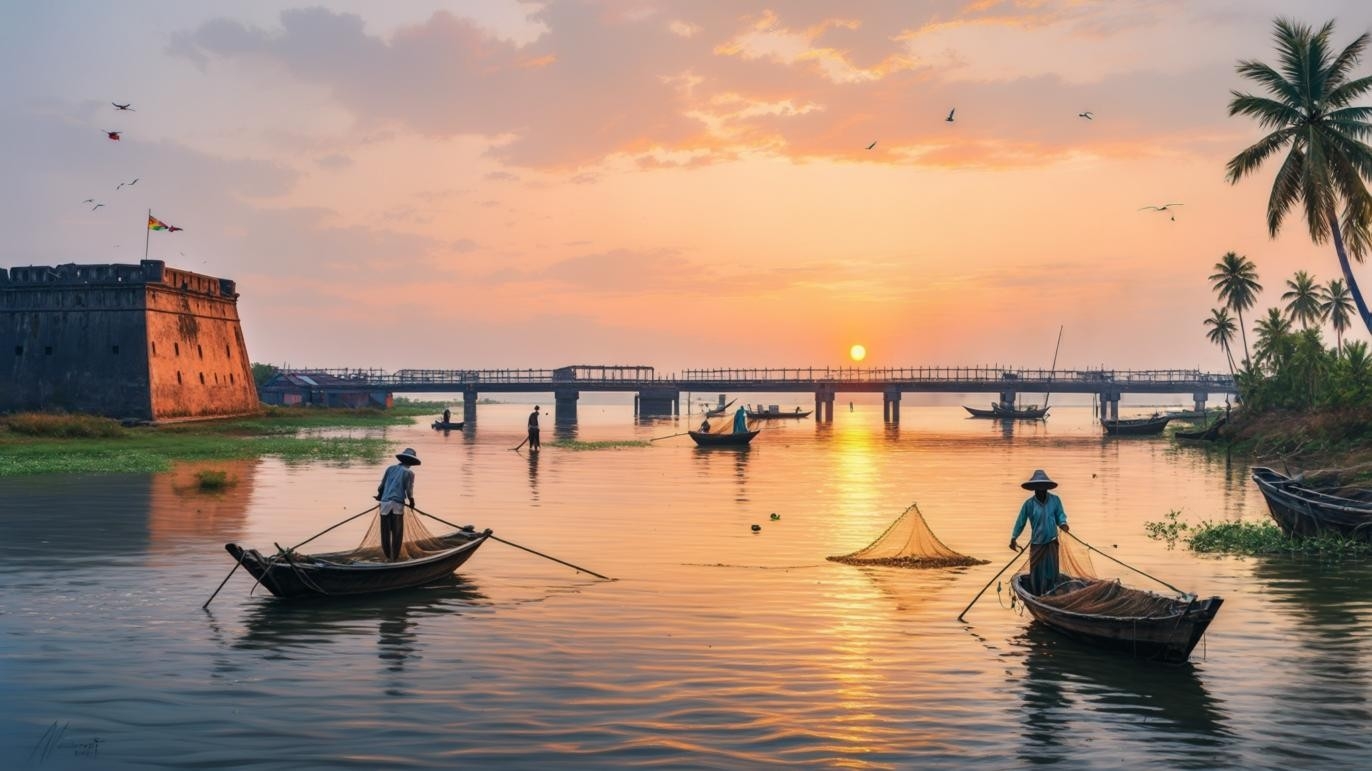
Colonial Era: The Portuguese, Dutch, and British left their mark, with the Dutch Fort (built in 1638) still standing as a testament to colonial architecture.
Modern History: Batticaloa was significantly affected by the Sri Lankan Civil War (1983–2009) but has since undergone substantial recovery and development.

Batticaloa’s geography is defined by its lagoon, beaches, and fertile lands:

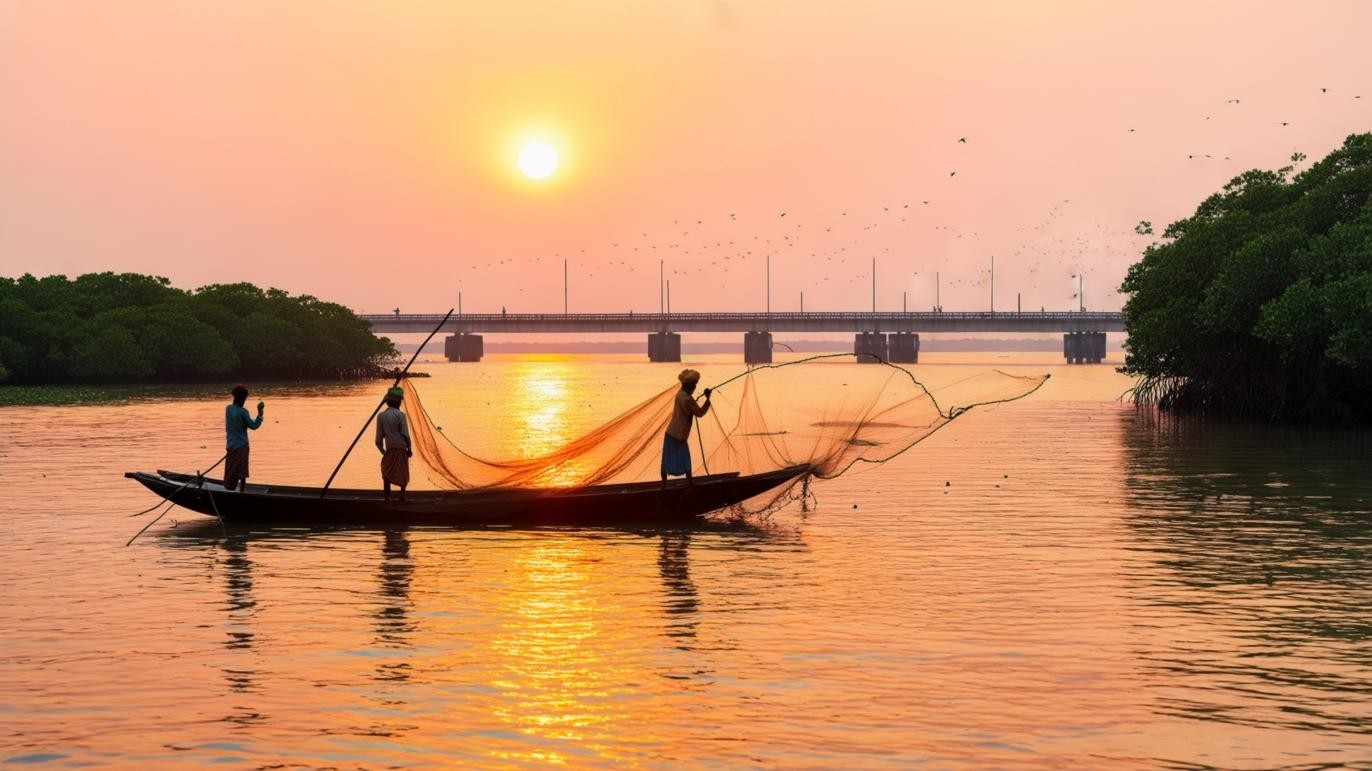
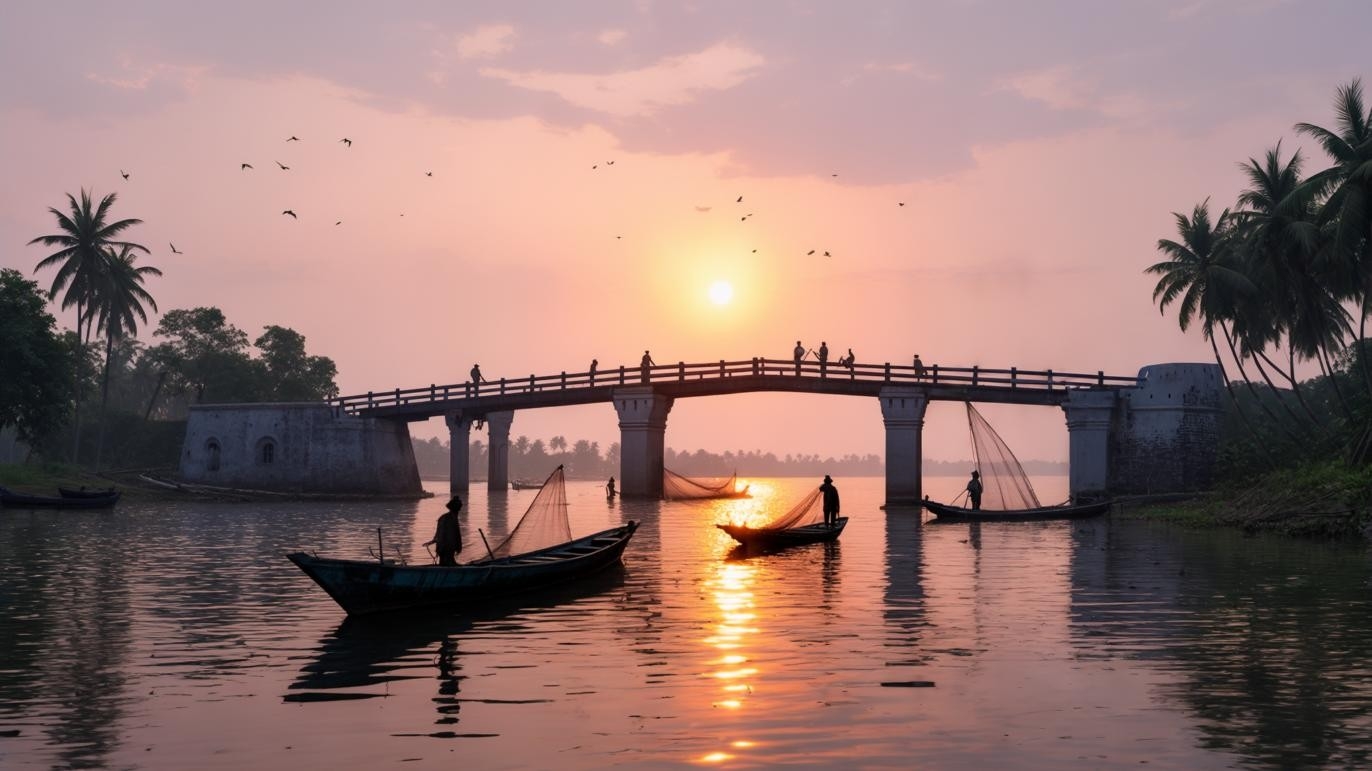
Batticaloa Lagoon: Spanning over 56 km, this lagoon is a hub for fishing and biodiversity. The "singing fish" phenomenon, a mysterious musical sound, is best heard on moonlit nights near Kallady Bridge.
Beaches: Pasikudah and Kalkudah beaches, with their coral reefs and shallow waters, are popular for tourism and water sports.
Mangrove Forests: The lagoon’s mangroves support diverse ecosystems, including rare bird species.

Batticaloa is a melting pot of cultures:

Festivals: The city celebrates Hindu festivals like Deepavali and Thaipongal, Muslim events like Eid, and Christian traditions, reflecting its diversity.
Cuisine: Local dishes include kool (a seafood porridge), pittu, and spicy Tamil curries, often made with fresh lagoon catch.

Landmarks and Attractions.

Batticaloa Fort: A well-preserved Dutch fort now housing administrative offices.
Kallady Bridge: A historic bridge offering scenic views and a spot to hear the singing fish.
Batticaloa Lighthouse: A 28-meter lighthouse built in 1913, offering panoramic views.
Unnichchai Tank: A serene reservoir ideal for birdwatching.

Batticaloa is a city of contrasts—where ancient traditions meet modern aspirations, and natural wonders like the singing fish captivate visitors. Its resilience, cultural richness, and scenic beauty make it a hidden gem in Sri Lanka, inviting exploration and appreciation.

image

Batticaloa, a vibrant coastal city in Sri Lanka’s Eastern Province, is known for its rich history, cultural diversity, and unique natural phenomena. Situated along a serene lagoon, it is often called the "Land of the Singing Fish" due to a mysterious underwater sound heard in its lagoon, attributed to a type of fish or shellfish. This city blends Tamil, Sinhala, and Muslim cultures, creating a unique tapestry of traditions, cuisine, and architecture.

Batticaloa has a storied past, with influences from ancient Tamil kingdoms, colonial powers, and modern conflicts:

Ancient Roots: The region was part of the ancient Tamil kingdoms and is mentioned in historical texts like the Mattakallappu Manmiyam, which chronicles its cultural heritage.
Colonial Era: The Portuguese, Dutch, and British left their mark, with the Dutch Fort (built in 1638) still standing as a testament to colonial architecture.
Modern History: Batticaloa was significantly affected by the Sri Lankan Civil War (1983–2009) but has since undergone substantial recovery and development.

Batticaloa’s geography is defined by its lagoon, beaches, and fertile lands:

Batticaloa Lagoon: Spanning over 56 km, this lagoon is a hub for fishing and biodiversity. The "singing fish" phenomenon, a mysterious musical sound, is best heard on moonlit nights near Kallady Bridge.
Beaches: Pasikudah and Kalkudah beaches, with their coral reefs and shallow waters, are popular for tourism and water sports.
Mangrove Forests: The lagoon’s mangroves support diverse ecosystems, including rare bird species.

Batticaloa is a melting pot of cultures:

Festivals: The city celebrates Hindu festivals like Deepavali and Thaipongal, Muslim events like Eid, and Christian traditions, reflecting its diversity.
Cuisine: Local dishes include kool (a seafood porridge), pittu, and spicy Tamil curries, often made with fresh lagoon catch.

Landmarks and Attractions.

Batticaloa Fort: A well-preserved Dutch fort now housing administrative offices.
Kallady Bridge: A historic bridge offering scenic views and a spot to hear the singing fish.
Batticaloa Lighthouse: A 28-meter lighthouse built in 1913, offering panoramic views.
Unnichchai Tank: A serene reservoir ideal for birdwatching.

Batticaloa is a city of contrasts—where ancient traditions meet modern aspirations, and natural wonders like the singing fish captivate visitors. Its resilience, cultural richness, and scenic beauty make it a hidden gem in Sri Lanka, inviting exploration and appreciation.

image

Batticaloa, a vibrant coastal city in Sri Lanka’s Eastern Province, is known for its rich history, cultural diversity, and unique natural phenomena. Situated along a serene lagoon, it is often called the "Land of the Singing Fish" due to a mysterious underwater sound heard in its lagoon, attributed to a type of fish or shellfish. This city blends Tamil, Sinhala, and Muslim cultures, creating a unique tapestry of traditions, cuisine, and architecture.

Batticaloa has a storied past, with influences from ancient Tamil kingdoms, colonial powers, and modern conflicts:

Ancient Roots: The region was part of the ancient Tamil kingdoms and is mentioned in historical texts like the Mattakallappu Manmiyam, which chronicles its cultural heritage.
Colonial Era: The Portuguese, Dutch, and British left their mark, with the Dutch Fort (built in 1638) still standing as a testament to colonial architecture.
Modern History: Batticaloa was significantly affected by the Sri Lankan Civil War (1983–2009) but has since undergone substantial recovery and development.

Batticaloa’s geography is defined by its lagoon, beaches, and fertile lands:

Batticaloa Lagoon: Spanning over 56 km, this lagoon is a hub for fishing and biodiversity. The "singing fish" phenomenon, a mysterious musical sound, is best heard on moonlit nights near Kallady Bridge.
Beaches: Pasikudah and Kalkudah beaches, with their coral reefs and shallow waters, are popular for tourism and water sports.
Mangrove Forests: The lagoon’s mangroves support diverse ecosystems, including rare bird species.

Batticaloa is a melting pot of cultures:

Festivals: The city celebrates Hindu festivals like Deepavali and Thaipongal, Muslim events like Eid, and Christian traditions, reflecting its diversity.
Cuisine: Local dishes include kool (a seafood porridge), pittu, and spicy Tamil curries, often made with fresh lagoon catch.

Landmarks and Attractions.

Batticaloa Fort: A well-preserved Dutch fort now housing administrative offices.
Kallady Bridge: A historic bridge offering scenic views and a spot to hear the singing fish.
Batticaloa Lighthouse: A 28-meter lighthouse built in 1913, offering panoramic views.
Unnichchai Tank: A serene reservoir ideal for birdwatching.

Batticaloa is a city of contrasts—where ancient traditions meet modern aspirations, and natural wonders like the singing fish captivate visitors. Its resilience, cultural richness, and scenic beauty make it a hidden gem in Sri Lanka, inviting exploration and appreciation.

image

Batticaloa, a vibrant coastal city in Sri Lanka’s Eastern Province, is known for its rich history, cultural diversity, and unique natural phenomena. Situated along a serene lagoon, it is often called the "Land of the Singing Fish" due to a mysterious underwater sound heard in its lagoon, attributed to a type of fish or shellfish. This city blends Tamil, Sinhala, and Muslim cultures, creating a unique tapestry of traditions, cuisine, and architecture.

Batticaloa has a storied past, with influences from ancient Tamil kingdoms, colonial powers, and modern conflicts:

Ancient Roots: The region was part of the ancient Tamil kingdoms and is mentioned in historical texts like the Mattakallappu Manmiyam, which chronicles its cultural heritage.
Colonial Era: The Portuguese, Dutch, and British left their mark, with the Dutch Fort (built in 1638) still standing as a testament to colonial architecture.
Modern History: Batticaloa was significantly affected by the Sri Lankan Civil War (1983–2009) but has since undergone substantial recovery and development.

Batticaloa’s geography is defined by its lagoon, beaches, and fertile lands:

Batticaloa Lagoon: Spanning over 56 km, this lagoon is a hub for fishing and biodiversity. The "singing fish" phenomenon, a mysterious musical sound, is best heard on moonlit nights near Kallady Bridge.
Beaches: Pasikudah and Kalkudah beaches, with their coral reefs and shallow waters, are popular for tourism and water sports.
Mangrove Forests: The lagoon’s mangroves support diverse ecosystems, including rare bird species.

Batticaloa is a melting pot of cultures:

Festivals: The city celebrates Hindu festivals like Deepavali and Thaipongal, Muslim events like Eid, and Christian traditions, reflecting its diversity.
Cuisine: Local dishes include kool (a seafood porridge), pittu, and spicy Tamil curries, often made with fresh lagoon catch.

Landmarks and Attractions.

Batticaloa Fort: A well-preserved Dutch fort now housing administrative offices.
Kallady Bridge: A historic bridge offering scenic views and a spot to hear the singing fish.
Batticaloa Lighthouse: A 28-meter lighthouse built in 1913, offering panoramic views.
Unnichchai Tank: A serene reservoir ideal for birdwatching.

Batticaloa is a city of contrasts—where ancient traditions meet modern aspirations, and natural wonders like the singing fish captivate visitors. Its resilience, cultural richness, and scenic beauty make it a hidden gem in Sri Lanka, inviting exploration and appreciation.

image

Batticaloa, a vibrant coastal city in Sri Lanka’s Eastern Province, is known for its rich history, cultural diversity, and unique natural phenomena. Situated along a serene lagoon, it is often called the "Land of the Singing Fish" due to a mysterious underwater sound heard in its lagoon, attributed to a type of fish or shellfish. This city blends Tamil, Sinhala, and Muslim cultures, creating a unique tapestry of traditions, cuisine, and architecture.

Batticaloa has a storied past, with influences from ancient Tamil kingdoms, colonial powers, and modern conflicts:

Ancient Roots: The region was part of the ancient Tamil kingdoms and is mentioned in historical texts like the Mattakallappu Manmiyam, which chronicles its cultural heritage.
Colonial Era: The Portuguese, Dutch, and British left their mark, with the Dutch Fort (built in 1638) still standing as a testament to colonial architecture.
Modern History: Batticaloa was significantly affected by the Sri Lankan Civil War (1983–2009) but has since undergone substantial recovery and development.

Batticaloa’s geography is defined by its lagoon, beaches, and fertile lands:

Batticaloa Lagoon: Spanning over 56 km, this lagoon is a hub for fishing and biodiversity. The "singing fish" phenomenon, a mysterious musical sound, is best heard on moonlit nights near Kallady Bridge.
Beaches: Pasikudah and Kalkudah beaches, with their coral reefs and shallow waters, are popular for tourism and water sports.
Mangrove Forests: The lagoon’s mangroves support diverse ecosystems, including rare bird species.

Batticaloa is a melting pot of cultures:

Festivals: The city celebrates Hindu festivals like Deepavali and Thaipongal, Muslim events like Eid, and Christian traditions, reflecting its diversity.
Cuisine: Local dishes include kool (a seafood porridge), pittu, and spicy Tamil curries, often made with fresh lagoon catch.

Landmarks and Attractions.

Batticaloa Fort: A well-preserved Dutch fort now housing administrative offices.
Kallady Bridge: A historic bridge offering scenic views and a spot to hear the singing fish.
Batticaloa Lighthouse: A 28-meter lighthouse built in 1913, offering panoramic views.
Unnichchai Tank: A serene reservoir ideal for birdwatching.

Batticaloa is a city of contrasts—where ancient traditions meet modern aspirations, and natural wonders like the singing fish captivate visitors. Its resilience, cultural richness, and scenic beauty make it a hidden gem in Sri Lanka, inviting exploration and appreciation.

image
image
image
image

Ampara, the main town of Ampara District in Sri Lanka’s Eastern Province, is a vibrant administrative and agricultural hub located approximately 360 km east of Colombo and 60 km south of Batticaloa. Originally a hunters’ resting place during British colonial times in the late 1890s, Ampara transformed into a town with the Gal Oya development scheme in 1949, initiated by Prime Minister D.S. Senanayake. Initially serving as a residence for workers constructing the Inginiyagala Dam, it later became the central administrative town of the Gal Oya Valley.

Ampara’s modern development began with the Gal Oya scheme, which focused on agricultural growth, particularly paddy cultivation, making the district one of Sri Lanka’s largest paddy-producing regions. The town was established as the administrative center of Ampara District, carved out from Batticaloa District in April 1961. Historically, the area was part of the ancient Digamadulla Kingdom, a flourishing agricultural and trade base, with archaeological sites like the Buddangala Monastery, dating back to the 2nd century BC, showcasing its rich heritage.

Ampara is a melting pot of ethnicities and religions, reflecting the district’s diversity. According to the 2012 census, the Ampara District’s population was 648,057, with 43.58% Sri Lankan Muslims, 38.73% Sinhalese, and 17.39% Sri Lankan Tamils, alongside smaller communities of Burghers, Malays, and Vedda. In the Ampara DS Division, the religious composition includes 97.16% Buddhists, 1.23% Roman Catholics, 0.73% Muslims, 0.54% other Christians, and 0.33% Hindus. This diversity fosters a vibrant cultural fabric with active community engagement.

Ampara offers a mix of natural, cultural, and historical attractions:

Kumana National Park: A haven for wildlife enthusiasts, this park spans 35,664 hectares and is renowned for birdwatching, with 255 of Sri Lanka’s 400 bird species recorded. The Kumana Villu, a 200-hectare swamp lake, is a key feature.
Gal Oya National Park: Known for boat and jeep safaris, it offers sightings of elephants, leopards, and birds, especially from March to July. The park’s “Bird Island” is a highlight for visitors.
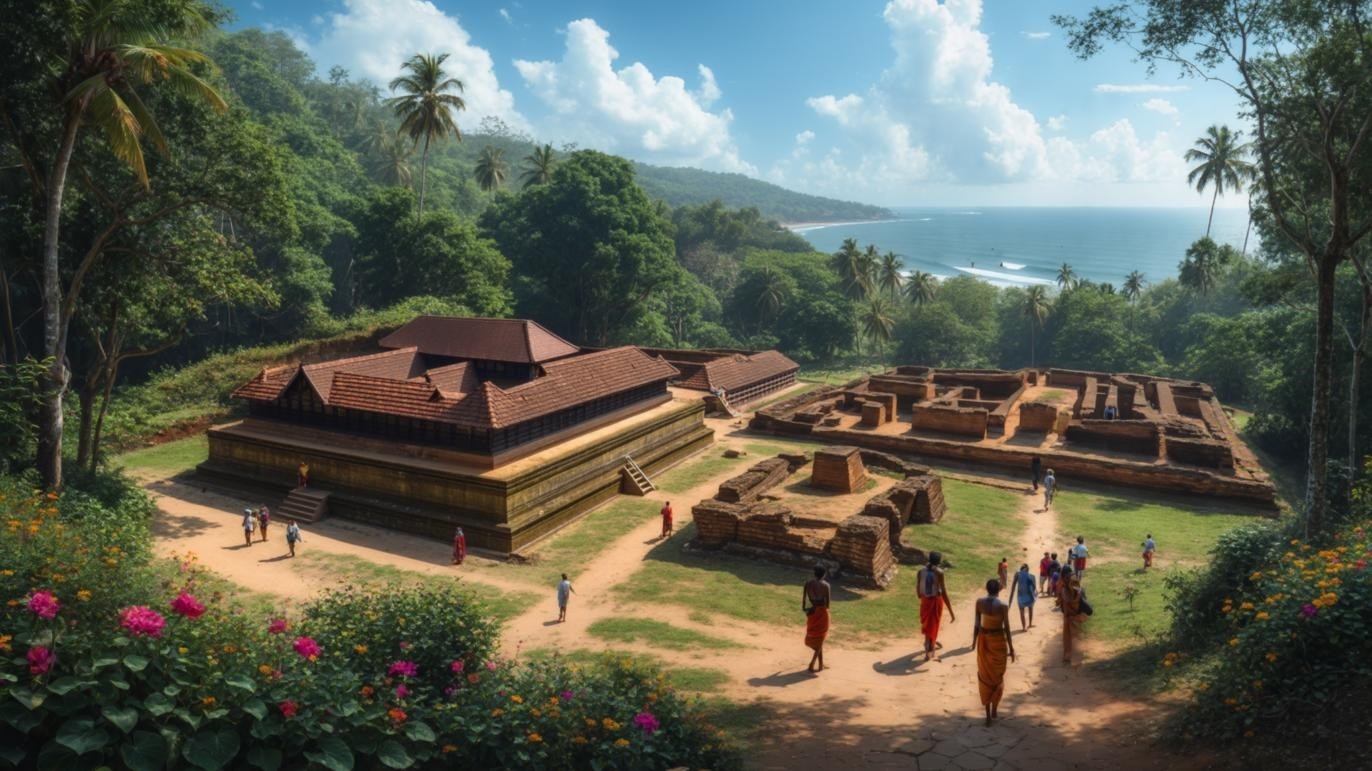
Buddangala Monastery: A 2300-year-old Buddhist meditation center with ruins spread across 200 acres, housing relics of Lord Buddha and his disciples.
Mahaoya Hot Springs: Located 2 km from Mahaoya town, these springs feature seven wells with temperatures up to 56°C, with two suitable for bathing.
Arugam Bay: A world-famous surfing destination 78 km from Ampara, attracting tourists despite slow recovery from the 2004 tsunami.

Ampara city combines historical significance, cultural diversity, and natural beauty, making it an intriguing destination for travelers and a vital center for the Eastern Province. Its agricultural prominence, coupled with attractions like Kumana and Gal Oya National Parks, offers a serene yet enriching experience, though ongoing development is needed to enhance infrastructure and services.

image

Ampara, the main town of Ampara District in Sri Lanka’s Eastern Province, is a vibrant administrative and agricultural hub located approximately 360 km east of Colombo and 60 km south of Batticaloa. Originally a hunters’ resting place during British colonial times in the late 1890s, Ampara transformed into a town with the Gal Oya development scheme in 1949, initiated by Prime Minister D.S. Senanayake. Initially serving as a residence for workers constructing the Inginiyagala Dam, it later became the central administrative town of the Gal Oya Valley.

Ampara’s modern development began with the Gal Oya scheme, which focused on agricultural growth, particularly paddy cultivation, making the district one of Sri Lanka’s largest paddy-producing regions. The town was established as the administrative center of Ampara District, carved out from Batticaloa District in April 1961. Historically, the area was part of the ancient Digamadulla Kingdom, a flourishing agricultural and trade base, with archaeological sites like the Buddangala Monastery, dating back to the 2nd century BC, showcasing its rich heritage.

Ampara is a melting pot of ethnicities and religions, reflecting the district’s diversity. According to the 2012 census, the Ampara District’s population was 648,057, with 43.58% Sri Lankan Muslims, 38.73% Sinhalese, and 17.39% Sri Lankan Tamils, alongside smaller communities of Burghers, Malays, and Vedda. In the Ampara DS Division, the religious composition includes 97.16% Buddhists, 1.23% Roman Catholics, 0.73% Muslims, 0.54% other Christians, and 0.33% Hindus. This diversity fosters a vibrant cultural fabric with active community engagement.

Ampara offers a mix of natural, cultural, and historical attractions:

Kumana National Park: A haven for wildlife enthusiasts, this park spans 35,664 hectares and is renowned for birdwatching, with 255 of Sri Lanka’s 400 bird species recorded. The Kumana Villu, a 200-hectare swamp lake, is a key feature.
Gal Oya National Park: Known for boat and jeep safaris, it offers sightings of elephants, leopards, and birds, especially from March to July. The park’s “Bird Island” is a highlight for visitors.
Buddangala Monastery: A 2300-year-old Buddhist meditation center with ruins spread across 200 acres, housing relics of Lord Buddha and his disciples.
Mahaoya Hot Springs: Located 2 km from Mahaoya town, these springs feature seven wells with temperatures up to 56°C, with two suitable for bathing.
Arugam Bay: A world-famous surfing destination 78 km from Ampara, attracting tourists despite slow recovery from the 2004 tsunami.

Ampara city combines historical significance, cultural diversity, and natural beauty, making it an intriguing destination for travelers and a vital center for the Eastern Province. Its agricultural prominence, coupled with attractions like Kumana and Gal Oya National Parks, offers a serene yet enriching experience, though ongoing development is needed to enhance infrastructure and services.

image