Anuradhapura, located in the North Central Province of Sri Lanka, is one of the island's most significant historical and cultural sites. As the first capital of Sri Lanka, established in the 4th century BCE, it served as a political, religious, and cultural center for over a millennium. Today, it is a UNESCO World Heritage Site, renowned for its well-preserved ruins, ancient stupas, and profound spiritual significance in Buddhism.

Anuradhapura was founded by King Pandukabhaya around 377 BCE and remained the capital until the 11th century CE. The city flourished under the rule of successive Sinhalese kings, who developed advanced irrigation systems, monumental architecture, and a thriving Buddhist culture. It was a hub of Theravada Buddhism, attracting monks and scholars from across Asia. The city’s decline began with invasions from South India, particularly the Chola dynasty, leading to its abandonment as the capital in favor of Polonnaruwa.

Key Sites and Attractions.

Sri Maha Bodhi.
At the heart of Anuradhapura lies the sacred Sri Maha Bodhi, a fig tree believed to be a direct descendant of the Bodhi tree under which the Buddha attained enlightenment. Planted in 288 BCE by Sanghamitta, daughter of Emperor Ashoka, it is one of the oldest living trees in the world and a major pilgrimage site for Buddhists.

Dagobas (Stupas).
Ruwanwelisaya: This massive stupa, built by King Dutugemunu in the 2nd century BCE, is one of the tallest ancient monuments in the world. It symbolizes the architectural prowess and religious devotion of the era.
Jetavanarama: Once the third-largest structure in the ancient world, this stupa was constructed by King Mahasena in the 3rd century CE. It remains a testament to the engineering skills of ancient Sri Lanka.
Abhayagiri: Built in the 1st century BCE, this stupa was part of a major monastic complex that housed thousands of monks and served as a center for Mahayana Buddhism.

Ancient Reservoirs.
Anuradhapura is famous for its sophisticated irrigation systems, including reservoirs like Tissa Wewa and Basawakkulama Wewa. These tanks, built to sustain agriculture in the dry zone, showcase the advanced hydraulic engineering of the time.

Moonstones and Guardstones.
The intricately carved moonstones (semi-circular stone slabs) and guardstones at temple entrances are iconic features of Anuradhapura’s architecture. These carvings depict symbolic motifs, including animals and lotuses, representing spiritual and worldly concepts.

Samadhi Buddha Statue.
This 4th-century statue depicts the Buddha in a meditative pose, exuding serenity and artistic finesse. It is one of the finest examples of ancient Sinhalese sculpture.

Anuradhapura is a spiritual epicenter for Sri Lankan Buddhists, housing relics such as the Buddha’s collarbone, enshrined in the Thuparamaya Stupa. The city’s monasteries, such as Abhayagiri and Jetavanarama, were once global centers of Buddhist learning, fostering exchanges with India, China, and Southeast Asia. Annual festivals, such as Poson Poya, celebrate the arrival of Buddhism in Sri Lanka and draw thousands of pilgrims.

Anuradhapura is more than a historical site; it is a living testament to Sri Lanka’s ancient heritage, engineering ingenuity, and spiritual legacy. Its stupas, reservoirs, and sacred tree continue to inspire awe, offering a glimpse into a civilization that thrived for centuries. For historians, archaeologists, and pilgrims alike, Anuradhapura remains a timeless treasure.


image

Anuradhapura, located in the North Central Province of Sri Lanka, is one of the island's most significant historical and cultural sites. As the first capital of Sri Lanka, established in the 4th century BCE, it served as a political, religious, and cultural center for over a millennium. Today, it is a UNESCO World Heritage Site, renowned for its well-preserved ruins, ancient stupas, and profound spiritual significance in Buddhism.

Anuradhapura was founded by King Pandukabhaya around 377 BCE and remained the capital until the 11th century CE. The city flourished under the rule of successive Sinhalese kings, who developed advanced irrigation systems, monumental architecture, and a thriving Buddhist culture. It was a hub of Theravada Buddhism, attracting monks and scholars from across Asia. The city’s decline began with invasions from South India, particularly the Chola dynasty, leading to its abandonment as the capital in favor of Polonnaruwa.

Key Sites and Attractions.

Sri Maha Bodhi.
At the heart of Anuradhapura lies the sacred Sri Maha Bodhi, a fig tree believed to be a direct descendant of the Bodhi tree under which the Buddha attained enlightenment. Planted in 288 BCE by Sanghamitta, daughter of Emperor Ashoka, it is one of the oldest living trees in the world and a major pilgrimage site for Buddhists.

Dagobas (Stupas).
Ruwanwelisaya: This massive stupa, built by King Dutugemunu in the 2nd century BCE, is one of the tallest ancient monuments in the world. It symbolizes the architectural prowess and religious devotion of the era.
Jetavanarama: Once the third-largest structure in the ancient world, this stupa was constructed by King Mahasena in the 3rd century CE. It remains a testament to the engineering skills of ancient Sri Lanka.
Abhayagiri: Built in the 1st century BCE, this stupa was part of a major monastic complex that housed thousands of monks and served as a center for Mahayana Buddhism.

Ancient Reservoirs.
Anuradhapura is famous for its sophisticated irrigation systems, including reservoirs like Tissa Wewa and Basawakkulama Wewa. These tanks, built to sustain agriculture in the dry zone, showcase the advanced hydraulic engineering of the time.

Moonstones and Guardstones.
The intricately carved moonstones (semi-circular stone slabs) and guardstones at temple entrances are iconic features of Anuradhapura’s architecture. These carvings depict symbolic motifs, including animals and lotuses, representing spiritual and worldly concepts.

Samadhi Buddha Statue.
This 4th-century statue depicts the Buddha in a meditative pose, exuding serenity and artistic finesse. It is one of the finest examples of ancient Sinhalese sculpture.

Anuradhapura is a spiritual epicenter for Sri Lankan Buddhists, housing relics such as the Buddha’s collarbone, enshrined in the Thuparamaya Stupa. The city’s monasteries, such as Abhayagiri and Jetavanarama, were once global centers of Buddhist learning, fostering exchanges with India, China, and Southeast Asia. Annual festivals, such as Poson Poya, celebrate the arrival of Buddhism in Sri Lanka and draw thousands of pilgrims.

Anuradhapura is more than a historical site; it is a living testament to Sri Lanka’s ancient heritage, engineering ingenuity, and spiritual legacy. Its stupas, reservoirs, and sacred tree continue to inspire awe, offering a glimpse into a civilization that thrived for centuries. For historians, archaeologists, and pilgrims alike, Anuradhapura remains a timeless treasure.

image

Anuradhapura, located in the North Central Province of Sri Lanka, is one of the island's most significant historical and cultural sites. As the first capital of Sri Lanka, established in the 4th century BCE, it served as a political, religious, and cultural center for over a millennium. Today, it is a UNESCO World Heritage Site, renowned for its well-preserved ruins, ancient stupas, and profound spiritual significance in Buddhism.

Anuradhapura was founded by King Pandukabhaya around 377 BCE and remained the capital until the 11th century CE. The city flourished under the rule of successive Sinhalese kings, who developed advanced irrigation systems, monumental architecture, and a thriving Buddhist culture. It was a hub of Theravada Buddhism, attracting monks and scholars from across Asia. The city’s decline began with invasions from South India, particularly the Chola dynasty, leading to its abandonment as the capital in favor of Polonnaruwa.

Key Sites and Attractions.

Sri Maha Bodhi.
At the heart of Anuradhapura lies the sacred Sri Maha Bodhi, a fig tree believed to be a direct descendant of the Bodhi tree under which the Buddha attained enlightenment. Planted in 288 BCE by Sanghamitta, daughter of Emperor Ashoka, it is one of the oldest living trees in the world and a major pilgrimage site for Buddhists.

Dagobas (Stupas).
Ruwanwelisaya: This massive stupa, built by King Dutugemunu in the 2nd century BCE, is one of the tallest ancient monuments in the world. It symbolizes the architectural prowess and religious devotion of the era.
Jetavanarama: Once the third-largest structure in the ancient world, this stupa was constructed by King Mahasena in the 3rd century CE. It remains a testament to the engineering skills of ancient Sri Lanka.
Abhayagiri: Built in the 1st century BCE, this stupa was part of a major monastic complex that housed thousands of monks and served as a center for Mahayana Buddhism.

Ancient Reservoirs.
Anuradhapura is famous for its sophisticated irrigation systems, including reservoirs like Tissa Wewa and Basawakkulama Wewa. These tanks, built to sustain agriculture in the dry zone, showcase the advanced hydraulic engineering of the time.

Moonstones and Guardstones.
The intricately carved moonstones (semi-circular stone slabs) and guardstones at temple entrances are iconic features of Anuradhapura’s architecture. These carvings depict symbolic motifs, including animals and lotuses, representing spiritual and worldly concepts.

Samadhi Buddha Statue.
This 4th-century statue depicts the Buddha in a meditative pose, exuding serenity and artistic finesse. It is one of the finest examples of ancient Sinhalese sculpture.

Anuradhapura is a spiritual epicenter for Sri Lankan Buddhists, housing relics such as the Buddha’s collarbone, enshrined in the Thuparamaya Stupa. The city’s monasteries, such as Abhayagiri and Jetavanarama, were once global centers of Buddhist learning, fostering exchanges with India, China, and Southeast Asia. Annual festivals, such as Poson Poya, celebrate the arrival of Buddhism in Sri Lanka and draw thousands of pilgrims.

Anuradhapura is more than a historical site; it is a living testament to Sri Lanka’s ancient heritage, engineering ingenuity, and spiritual legacy. Its stupas, reservoirs, and sacred tree continue to inspire awe, offering a glimpse into a civilization that thrived for centuries. For historians, archaeologists, and pilgrims alike, Anuradhapura remains a timeless treasure.

image
image
image
image

Vavuniya is a vibrant city in the Northern Province of Sri Lanka, serving as the capital of Vavuniya District. Located approximately 215 km from Colombo, it is a significant transport hub connecting the northern and central parts of the country. Known for its rich history, cultural diversity, and strategic importance, Vavuniya is a microcosm of Sri Lanka’s complex past and present.

Vavuniya’s history stretches back to ancient times when it was part of the Rajarata region between the 5th century BC and 13th century AD. Ruled by Vanniar Chieftains who paid tribute to the Jaffna Kingdom, the area later came under Portuguese, Dutch, and British colonial control. In 1815, the British unified Ceylon, incorporating Vavuniya into their Tamil administrative structure. Originally called Vanni District, it was renamed Vavuniya District after the creation of Mullaitivu District in 1978. The city played a pivotal role during the Sri Lankan Civil War, serving as a border town between Tamil and Sinhalese regions and was under partial control of the Liberation Tigers of Tamil Eelam until 2008, when the Sri Lankan military regained full control.

Vavuniya is a melting pot of ethnicities, predominantly Sri Lankan Tamils, with significant populations of Muslims and Sinhalese. The district’s population was recorded at 171,511 in 2012, heavily impacted by the civil war, which led to significant emigration and displacement. The city’s cosmopolitan nature mirrors the district’s diversity, with 89% of the Northern Province’s population being Sri Lankan Tamils, mostly Hindus, alongside Christians, Muslims, and a small number of Buddhists. Vavuniya’s cultural fabric is enriched by its vibrant markets, religious sites, and traditional cuisine.

Vavuniya offers a blend of historical, religious, and natural attractions:

Grand Jummah Mosque: A striking mosque with golden domes and aqua-tiled exteriors, located in the heart of Vavuniya’s bustling market. It is open to all visitors and is a significant cultural and photographic landmark.
Madukanda Vihara: A historic Buddhist temple 4 km from Vavuniya, believed to be the fourth resting point of the Buddha’s tooth relic in the 4th century AD. It features ancient granite carvings and offers free lodging for pilgrims.
Kandasamy Kovil: A Hindu temple dedicated to Lord Murugan, known for its ornate architecture and vibrant festivals, attracting devotees and tourists alike.
Archaeological Museum: Managed by the Department of Archaeology, this regional museum showcases 4th to 8th-century artifacts, including Buddha statues, Hindu idols, and Christian relics.
Wilpattu National Park: Located an hour’s drive from Vavuniya, this park is renowned for its leopard population, elephants, and diverse birdlife, offering jeep safaris and camping.
Kaludiya Pokuna Forest: An archaeological site with 2nd-century BC ruins and diverse flora and fauna, including rare birds and mammals.

Vavuniya is an emerging tourist destination, ideal for those interested in history, culture, and nature. The best time to visit is from December to April, with temperatures ranging from 22°C to 33°C. Local cuisine is a highlight, with restaurants like Yasotha Hotel (est. 1994), Ridmani Bakers, Royal Garden, and Lotus Restaurant serving traditional Sri Lankan dishes, including fish, chicken, and vegetable-filled rolls. The city’s markets and eateries offer an authentic taste of its homely charm.

Vavuniya is a city of contrasts, blending ancient heritage with modern aspirations. Its strategic location, cultural diversity, and historical significance make it a compelling destination for travelers and a vital hub in Sri Lanka’s Northern Province. While challenges remain, Vavuniya’s resilience and ongoing development efforts signal a promising future. For those seeking to explore Sri Lanka’s past and present, Vavuniya offers a unique and enriching experience.

image

Vavuniya is a vibrant city in the Northern Province of Sri Lanka, serving as the capital of Vavuniya District. Located approximately 215 km from Colombo, it is a significant transport hub connecting the northern and central parts of the country. Known for its rich history, cultural diversity, and strategic importance, Vavuniya is a microcosm of Sri Lanka’s complex past and present.

Vavuniya’s history stretches back to ancient times when it was part of the Rajarata region between the 5th century BC and 13th century AD. Ruled by Vanniar Chieftains who paid tribute to the Jaffna Kingdom, the area later came under Portuguese, Dutch, and British colonial control. In 1815, the British unified Ceylon, incorporating Vavuniya into their Tamil administrative structure. Originally called Vanni District, it was renamed Vavuniya District after the creation of Mullaitivu District in 1978. The city played a pivotal role during the Sri Lankan Civil War, serving as a border town between Tamil and Sinhalese regions and was under partial control of the Liberation Tigers of Tamil Eelam until 2008, when the Sri Lankan military regained full control.

Vavuniya is a melting pot of ethnicities, predominantly Sri Lankan Tamils, with significant populations of Muslims and Sinhalese. The district’s population was recorded at 171,511 in 2012, heavily impacted by the civil war, which led to significant emigration and displacement. The city’s cosmopolitan nature mirrors the district’s diversity, with 89% of the Northern Province’s population being Sri Lankan Tamils, mostly Hindus, alongside Christians, Muslims, and a small number of Buddhists. Vavuniya’s cultural fabric is enriched by its vibrant markets, religious sites, and traditional cuisine.

Vavuniya offers a blend of historical, religious, and natural attractions:

Grand Jummah Mosque: A striking mosque with golden domes and aqua-tiled exteriors, located in the heart of Vavuniya’s bustling market. It is open to all visitors and is a significant cultural and photographic landmark.
Madukanda Vihara: A historic Buddhist temple 4 km from Vavuniya, believed to be the fourth resting point of the Buddha’s tooth relic in the 4th century AD. It features ancient granite carvings and offers free lodging for pilgrims.
Kandasamy Kovil: A Hindu temple dedicated to Lord Murugan, known for its ornate architecture and vibrant festivals, attracting devotees and tourists alike.
Archaeological Museum: Managed by the Department of Archaeology, this regional museum showcases 4th to 8th-century artifacts, including Buddha statues, Hindu idols, and Christian relics.
Wilpattu National Park: Located an hour’s drive from Vavuniya, this park is renowned for its leopard population, elephants, and diverse birdlife, offering jeep safaris and camping.
Kaludiya Pokuna Forest: An archaeological site with 2nd-century BC ruins and diverse flora and fauna, including rare birds and mammals.

Vavuniya is an emerging tourist destination, ideal for those interested in history, culture, and nature. The best time to visit is from December to April, with temperatures ranging from 22°C to 33°C. Local cuisine is a highlight, with restaurants like Yasotha Hotel (est. 1994), Ridmani Bakers, Royal Garden, and Lotus Restaurant serving traditional Sri Lankan dishes, including fish, chicken, and vegetable-filled rolls. The city’s markets and eateries offer an authentic taste of its homely charm.

Vavuniya is a city of contrasts, blending ancient heritage with modern aspirations. Its strategic location, cultural diversity, and historical significance make it a compelling destination for travelers and a vital hub in Sri Lanka’s Northern Province. While challenges remain, Vavuniya’s resilience and ongoing development efforts signal a promising future. For those seeking to explore Sri Lanka’s past and present, Vavuniya offers a unique and enriching experience.

image

Vavuniya is a vibrant city in the Northern Province of Sri Lanka, serving as the capital of Vavuniya District. Located approximately 215 km from Colombo, it is a significant transport hub connecting the northern and central parts of the country. Known for its rich history, cultural diversity, and strategic importance, Vavuniya is a microcosm of Sri Lanka’s complex past and present.

Vavuniya’s history stretches back to ancient times when it was part of the Rajarata region between the 5th century BC and 13th century AD. Ruled by Vanniar Chieftains who paid tribute to the Jaffna Kingdom, the area later came under Portuguese, Dutch, and British colonial control. In 1815, the British unified Ceylon, incorporating Vavuniya into their Tamil administrative structure. Originally called Vanni District, it was renamed Vavuniya District after the creation of Mullaitivu District in 1978. The city played a pivotal role during the Sri Lankan Civil War, serving as a border town between Tamil and Sinhalese regions and was under partial control of the Liberation Tigers of Tamil Eelam until 2008, when the Sri Lankan military regained full control.

Vavuniya is a melting pot of ethnicities, predominantly Sri Lankan Tamils, with significant populations of Muslims and Sinhalese. The district’s population was recorded at 171,511 in 2012, heavily impacted by the civil war, which led to significant emigration and displacement. The city’s cosmopolitan nature mirrors the district’s diversity, with 89% of the Northern Province’s population being Sri Lankan Tamils, mostly Hindus, alongside Christians, Muslims, and a small number of Buddhists. Vavuniya’s cultural fabric is enriched by its vibrant markets, religious sites, and traditional cuisine.

Vavuniya offers a blend of historical, religious, and natural attractions:

Grand Jummah Mosque: A striking mosque with golden domes and aqua-tiled exteriors, located in the heart of Vavuniya’s bustling market. It is open to all visitors and is a significant cultural and photographic landmark.
Madukanda Vihara: A historic Buddhist temple 4 km from Vavuniya, believed to be the fourth resting point of the Buddha’s tooth relic in the 4th century AD. It features ancient granite carvings and offers free lodging for pilgrims.
Kandasamy Kovil: A Hindu temple dedicated to Lord Murugan, known for its ornate architecture and vibrant festivals, attracting devotees and tourists alike.
Archaeological Museum: Managed by the Department of Archaeology, this regional museum showcases 4th to 8th-century artifacts, including Buddha statues, Hindu idols, and Christian relics.
Wilpattu National Park: Located an hour’s drive from Vavuniya, this park is renowned for its leopard population, elephants, and diverse birdlife, offering jeep safaris and camping.
Kaludiya Pokuna Forest: An archaeological site with 2nd-century BC ruins and diverse flora and fauna, including rare birds and mammals.

Vavuniya is an emerging tourist destination, ideal for those interested in history, culture, and nature. The best time to visit is from December to April, with temperatures ranging from 22°C to 33°C. Local cuisine is a highlight, with restaurants like Yasotha Hotel (est. 1994), Ridmani Bakers, Royal Garden, and Lotus Restaurant serving traditional Sri Lankan dishes, including fish, chicken, and vegetable-filled rolls. The city’s markets and eateries offer an authentic taste of its homely charm.

Vavuniya is a city of contrasts, blending ancient heritage with modern aspirations. Its strategic location, cultural diversity, and historical significance make it a compelling destination for travelers and a vital hub in Sri Lanka’s Northern Province. While challenges remain, Vavuniya’s resilience and ongoing development efforts signal a promising future. For those seeking to explore Sri Lanka’s past and present, Vavuniya offers a unique and enriching experience.

image

Vavuniya is a vibrant city in the Northern Province of Sri Lanka, serving as the capital of Vavuniya District. Located approximately 215 km from Colombo, it is a significant transport hub connecting the northern and central parts of the country. Known for its rich history, cultural diversity, and strategic importance, Vavuniya is a microcosm of Sri Lanka’s complex past and present.

Vavuniya’s history stretches back to ancient times when it was part of the Rajarata region between the 5th century BC and 13th century AD. Ruled by Vanniar Chieftains who paid tribute to the Jaffna Kingdom, the area later came under Portuguese, Dutch, and British colonial control. In 1815, the British unified Ceylon, incorporating Vavuniya into their Tamil administrative structure. Originally called Vanni District, it was renamed Vavuniya District after the creation of Mullaitivu District in 1978. The city played a pivotal role during the Sri Lankan Civil War, serving as a border town between Tamil and Sinhalese regions and was under partial control of the Liberation Tigers of Tamil Eelam until 2008, when the Sri Lankan military regained full control.

Vavuniya is a melting pot of ethnicities, predominantly Sri Lankan Tamils, with significant populations of Muslims and Sinhalese. The district’s population was recorded at 171,511 in 2012, heavily impacted by the civil war, which led to significant emigration and displacement. The city’s cosmopolitan nature mirrors the district’s diversity, with 89% of the Northern Province’s population being Sri Lankan Tamils, mostly Hindus, alongside Christians, Muslims, and a small number of Buddhists. Vavuniya’s cultural fabric is enriched by its vibrant markets, religious sites, and traditional cuisine.

Vavuniya offers a blend of historical, religious, and natural attractions:

Grand Jummah Mosque: A striking mosque with golden domes and aqua-tiled exteriors, located in the heart of Vavuniya’s bustling market. It is open to all visitors and is a significant cultural and photographic landmark.
Madukanda Vihara: A historic Buddhist temple 4 km from Vavuniya, believed to be the fourth resting point of the Buddha’s tooth relic in the 4th century AD. It features ancient granite carvings and offers free lodging for pilgrims.
Kandasamy Kovil: A Hindu temple dedicated to Lord Murugan, known for its ornate architecture and vibrant festivals, attracting devotees and tourists alike.
Archaeological Museum: Managed by the Department of Archaeology, this regional museum showcases 4th to 8th-century artifacts, including Buddha statues, Hindu idols, and Christian relics.
Wilpattu National Park: Located an hour’s drive from Vavuniya, this park is renowned for its leopard population, elephants, and diverse birdlife, offering jeep safaris and camping.
Kaludiya Pokuna Forest: An archaeological site with 2nd-century BC ruins and diverse flora and fauna, including rare birds and mammals.

Vavuniya is an emerging tourist destination, ideal for those interested in history, culture, and nature. The best time to visit is from December to April, with temperatures ranging from 22°C to 33°C. Local cuisine is a highlight, with restaurants like Yasotha Hotel (est. 1994), Ridmani Bakers, Royal Garden, and Lotus Restaurant serving traditional Sri Lankan dishes, including fish, chicken, and vegetable-filled rolls. The city’s markets and eateries offer an authentic taste of its homely charm.

Vavuniya is a city of contrasts, blending ancient heritage with modern aspirations. Its strategic location, cultural diversity, and historical significance make it a compelling destination for travelers and a vital hub in Sri Lanka’s Northern Province. While challenges remain, Vavuniya’s resilience and ongoing development efforts signal a promising future. For those seeking to explore Sri Lanka’s past and present, Vavuniya offers a unique and enriching experience.

image

Vavuniya is a vibrant city in the Northern Province of Sri Lanka, serving as the capital of Vavuniya District. Located approximately 215 km from Colombo, it is a significant transport hub connecting the northern and central parts of the country. Known for its rich history, cultural diversity, and strategic importance, Vavuniya is a microcosm of Sri Lanka’s complex past and present.

Vavuniya’s history stretches back to ancient times when it was part of the Rajarata region between the 5th century BC and 13th century AD. Ruled by Vanniar Chieftains who paid tribute to the Jaffna Kingdom, the area later came under Portuguese, Dutch, and British colonial control. In 1815, the British unified Ceylon, incorporating Vavuniya into their Tamil administrative structure. Originally called Vanni District, it was renamed Vavuniya District after the creation of Mullaitivu District in 1978. The city played a pivotal role during the Sri Lankan Civil War, serving as a border town between Tamil and Sinhalese regions and was under partial control of the Liberation Tigers of Tamil Eelam until 2008, when the Sri Lankan military regained full control.

Vavuniya is a melting pot of ethnicities, predominantly Sri Lankan Tamils, with significant populations of Muslims and Sinhalese. The district’s population was recorded at 171,511 in 2012, heavily impacted by the civil war, which led to significant emigration and displacement. The city’s cosmopolitan nature mirrors the district’s diversity, with 89% of the Northern Province’s population being Sri Lankan Tamils, mostly Hindus, alongside Christians, Muslims, and a small number of Buddhists. Vavuniya’s cultural fabric is enriched by its vibrant markets, religious sites, and traditional cuisine.

Vavuniya offers a blend of historical, religious, and natural attractions:

Grand Jummah Mosque: A striking mosque with golden domes and aqua-tiled exteriors, located in the heart of Vavuniya’s bustling market. It is open to all visitors and is a significant cultural and photographic landmark.
Madukanda Vihara: A historic Buddhist temple 4 km from Vavuniya, believed to be the fourth resting point of the Buddha’s tooth relic in the 4th century AD. It features ancient granite carvings and offers free lodging for pilgrims.
Kandasamy Kovil: A Hindu temple dedicated to Lord Murugan, known for its ornate architecture and vibrant festivals, attracting devotees and tourists alike.
Archaeological Museum: Managed by the Department of Archaeology, this regional museum showcases 4th to 8th-century artifacts, including Buddha statues, Hindu idols, and Christian relics.
Wilpattu National Park: Located an hour’s drive from Vavuniya, this park is renowned for its leopard population, elephants, and diverse birdlife, offering jeep safaris and camping.
Kaludiya Pokuna Forest: An archaeological site with 2nd-century BC ruins and diverse flora and fauna, including rare birds and mammals.

Vavuniya is an emerging tourist destination, ideal for those interested in history, culture, and nature. The best time to visit is from December to April, with temperatures ranging from 22°C to 33°C. Local cuisine is a highlight, with restaurants like Yasotha Hotel (est. 1994), Ridmani Bakers, Royal Garden, and Lotus Restaurant serving traditional Sri Lankan dishes, including fish, chicken, and vegetable-filled rolls. The city’s markets and eateries offer an authentic taste of its homely charm.

Vavuniya is a city of contrasts, blending ancient heritage with modern aspirations. Its strategic location, cultural diversity, and historical significance make it a compelling destination for travelers and a vital hub in Sri Lanka’s Northern Province. While challenges remain, Vavuniya’s resilience and ongoing development efforts signal a promising future. For those seeking to explore Sri Lanka’s past and present, Vavuniya offers a unique and enriching experience.

image
image
image
image

Mullaitivu is a coastal town and the administrative capital of Mullaitivu District in Sri Lanka’s Northern Province. Known for its fishing heritage, pristine beaches, and complex history, Mullaitivu offers a unique blend of natural beauty and cultural significance, though it remains less developed for tourism compared to other Sri Lankan destinations.

Mullaitivu has a rich historical tapestry shaped by colonial and civil conflict. In the early 20th century, it grew as a key anchoring harbor for small sailing vessels trading goods between Colombo and Jaffna. During the Kandyan Wars, the British government house in Mullaitivu was besieged by forces led by Pandara Vanniyan and the Dissava of Nuwara Kalawiya, with Captain Drieberg and his Malay forces escaping to Jaffna by boat.

The town played a significant role during the Sri Lankan Civil War (1983–2009). It became an isolated base for the Sri Lankan armed forces until 1996, when the Liberation Tigers of Tamil Eelam (LTTE) overran the base, gaining control of the area. The LTTE established a naval base under Colonel Soosai, leading to maritime clashes, including notable battles in 2001. The Sri Lankan Army recaptured Mullaitivu on January 25, 2009, marking a turning point in the war’s final phase. The conflict caused significant loss of life and displacement, with the 2004 Indian Ocean tsunami further devastating the region, killing thousands and destroying infrastructure.

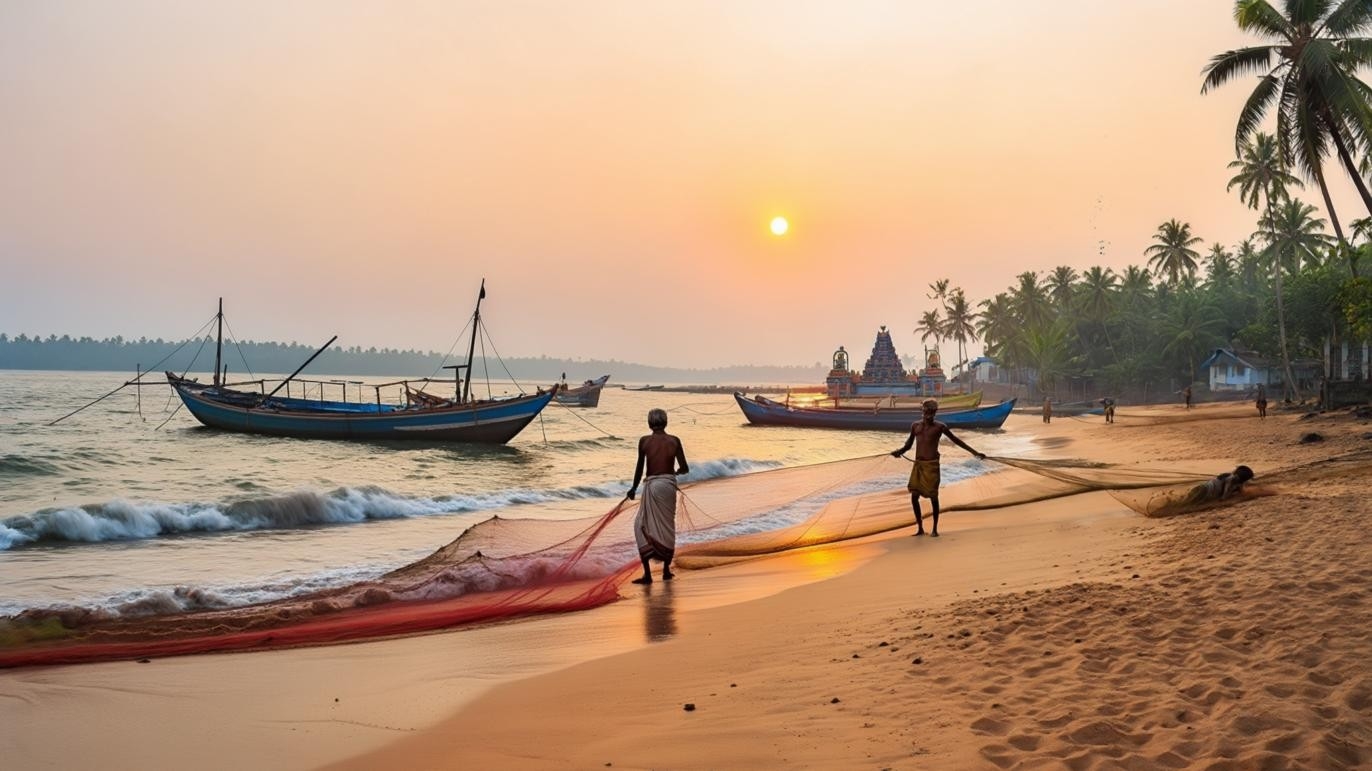
Mullaitivu’s pristine beaches, tranquil lagoons, and lush forests make it an emerging destination for travelers seeking solitude and natural beauty. Unlike commercialized areas like Colombo, its beaches offer serene, uncrowded experiences with golden sands and vibrant sunrises. The Mullaitivu War Museum provides insights into the region’s conflict history, while nearby temples and shrines showcase its cultural depth. Nature enthusiasts can explore diverse wildlife and birdwatching opportunities in the surrounding forests and lagoons.

Accommodation options are limited, with guesthouses like those listed on Airbnb offering basic amenities, some with air conditioning and proximity to the sea. The army-operated Lagoon’s Edge is a notable option, though tourism infrastructure remains underdeveloped. For budget-conscious travelers, visiting between June and August offers lower hotel prices.

Mullaitivu is a destination of contrasts—its natural beauty and cultural heritage juxtaposed against a history of conflict and recovery. While not a mainstream tourist spot, it offers an authentic, offbeat experience for those seeking to explore Sri Lanka’s lesser-known regions. Ongoing efforts to address its war-torn past and environmental challenges signal hope for a resilient future. For tailored travel plans, platforms like Hi DMC can craft itineraries to explore this hidden gem.

image

Mullaitivu is a coastal town and the administrative capital of Mullaitivu District in Sri Lanka’s Northern Province. Known for its fishing heritage, pristine beaches, and complex history, Mullaitivu offers a unique blend of natural beauty and cultural significance, though it remains less developed for tourism compared to other Sri Lankan destinations.

Mullaitivu has a rich historical tapestry shaped by colonial and civil conflict. In the early 20th century, it grew as a key anchoring harbor for small sailing vessels trading goods between Colombo and Jaffna. During the Kandyan Wars, the British government house in Mullaitivu was besieged by forces led by Pandara Vanniyan and the Dissava of Nuwara Kalawiya, with Captain Drieberg and his Malay forces escaping to Jaffna by boat.

The town played a significant role during the Sri Lankan Civil War (1983–2009). It became an isolated base for the Sri Lankan armed forces until 1996, when the Liberation Tigers of Tamil Eelam (LTTE) overran the base, gaining control of the area. The LTTE established a naval base under Colonel Soosai, leading to maritime clashes, including notable battles in 2001. The Sri Lankan Army recaptured Mullaitivu on January 25, 2009, marking a turning point in the war’s final phase. The conflict caused significant loss of life and displacement, with the 2004 Indian Ocean tsunami further devastating the region, killing thousands and destroying infrastructure.

Mullaitivu’s pristine beaches, tranquil lagoons, and lush forests make it an emerging destination for travelers seeking solitude and natural beauty. Unlike commercialized areas like Colombo, its beaches offer serene, uncrowded experiences with golden sands and vibrant sunrises. The Mullaitivu War Museum provides insights into the region’s conflict history, while nearby temples and shrines showcase its cultural depth. Nature enthusiasts can explore diverse wildlife and birdwatching opportunities in the surrounding forests and lagoons.

Accommodation options are limited, with guesthouses like those listed on Airbnb offering basic amenities, some with air conditioning and proximity to the sea. The army-operated Lagoon’s Edge is a notable option, though tourism infrastructure remains underdeveloped. For budget-conscious travelers, visiting between June and August offers lower hotel prices.

Mullaitivu is a destination of contrasts—its natural beauty and cultural heritage juxtaposed against a history of conflict and recovery. While not a mainstream tourist spot, it offers an authentic, offbeat experience for those seeking to explore Sri Lanka’s lesser-known regions. Ongoing efforts to address its war-torn past and environmental challenges signal hope for a resilient future. For tailored travel plans, platforms like Hi DMC can craft itineraries to explore this hidden gem.

image