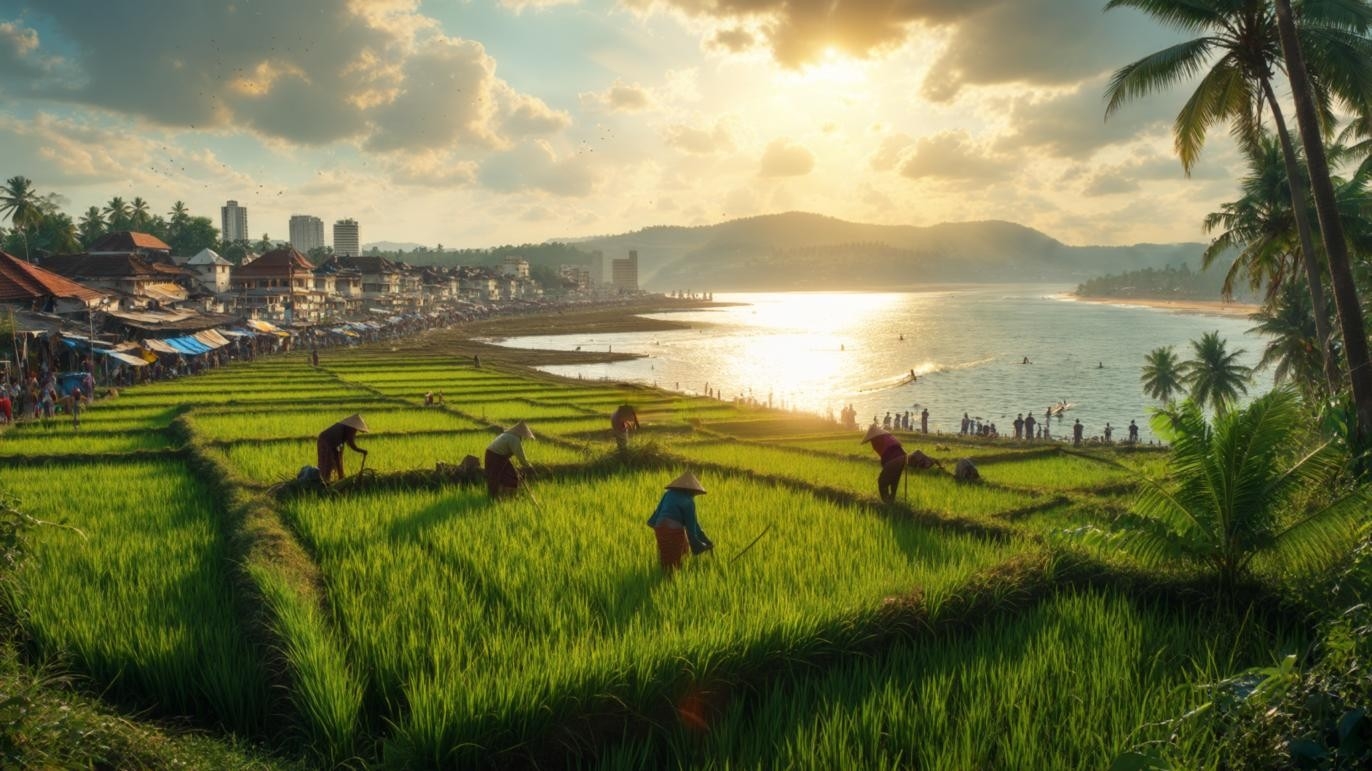
Ampara, the main town of Ampara District in Sri Lanka’s Eastern Province, is a vibrant administrative and agricultural hub located approximately 360 km east of Colombo and 60 km south of Batticaloa. Originally a hunters’ resting place during British colonial times in the late 1890s, Ampara transformed into a town with the Gal Oya development scheme in 1949, initiated by Prime Minister D.S. Senanayake. Initially serving as a residence for workers constructing the Inginiyagala Dam, it later became the central administrative town of the Gal Oya Valley.
Ampara’s modern development began with the Gal Oya scheme, which focused on agricultural growth, particularly paddy cultivation, making the district one of Sri Lanka’s largest paddy-producing regions. The town was established as the administrative center of Ampara District, carved out from Batticaloa District in April 1961. Historically, the area was part of the ancient Digamadulla Kingdom, a flourishing agricultural and trade base, with archaeological sites like the Buddangala Monastery, dating back to the 2nd century BC, showcasing its rich heritage.
Ampara is a melting pot of ethnicities and religions, reflecting the district’s diversity. According to the 2012 census, the Ampara District’s population was 648,057, with 43.58% Sri Lankan Muslims, 38.73% Sinhalese, and 17.39% Sri Lankan Tamils, alongside smaller communities of Burghers, Malays, and Vedda. In the Ampara DS Division, the religious composition includes 97.16% Buddhists, 1.23% Roman Catholics, 0.73% Muslims, 0.54% other Christians, and 0.33% Hindus. This diversity fosters a vibrant cultural fabric with active community engagement.
Ampara offers a mix of natural, cultural, and historical attractions:
Kumana National Park: A haven for wildlife enthusiasts, this park spans 35,664 hectares and is renowned for birdwatching, with 255 of Sri Lanka’s 400 bird species recorded. The Kumana Villu, a 200-hectare swamp lake, is a key feature.
Gal Oya National Park: Known for boat and jeep safaris, it offers sightings of elephants, leopards, and birds, especially from March to July. The park’s “Bird Island” is a highlight for visitors.
Buddangala Monastery: A 2300-year-old Buddhist meditation center with ruins spread across 200 acres, housing relics of Lord Buddha and his disciples.
Mahaoya Hot Springs: Located 2 km from Mahaoya town, these springs feature seven wells with temperatures up to 56°C, with two suitable for bathing.
Arugam Bay: A world-famous surfing destination 78 km from Ampara, attracting tourists despite slow recovery from the 2004 tsunami.
Ampara city combines historical significance, cultural diversity, and natural beauty, making it an intriguing destination for travelers and a vital center for the Eastern Province. Its agricultural prominence, coupled with attractions like Kumana and Gal Oya National Parks, offers a serene yet enriching experience, though ongoing development is needed to enhance infrastructure and services.