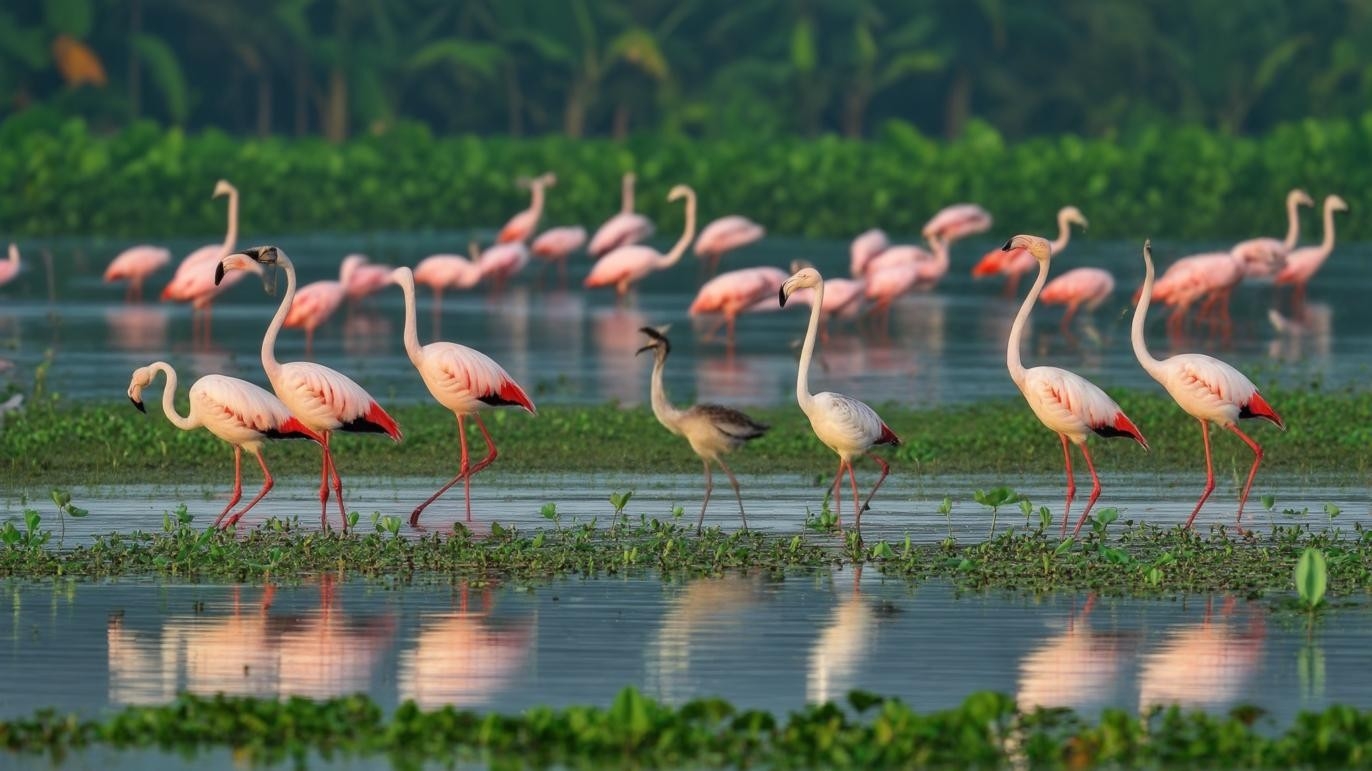
Mannar is a captivating town and district in the Northern Province of Sri Lanka, located on Mannar Island, a 130-square-kilometer peninsula connected to the mainland by a causeway and the Mannar Bridge along the A14 highway. The name "Mannar," derived from the Tamil word for "raised place of sand," reflects the island’s geological formation through sand accumulation. Known for its rich history, diverse ecology, and cultural significance, Mannar is a unique destination that blends natural beauty with historical depth.
Mannar’s history spans centuries, marked by its strategic importance and colonial influences. It was once a thriving center for pearl fishing, noted as early as the 2nd-century CE in the Periplus of the Erythraean Sea. The island served as an administrative point for the Jaffna Kingdom before falling under Portuguese control in the 16th century, followed by Dutch and British rule. The Mannar Fort, built by the Portuguese in 1560 and later rebuilt by the Dutch in 1658, stands as a testament to this colonial past, though its interior is largely in ruins. The district also bears scars from the Sri Lankan Civil War (1983–2009), during which it was controlled by the LTTE, leading to significant displacement and destruction. A mass grave discovered in 2014 near a Hindu kovil underscores the war’s tragic impact, and visitors are encouraged to approach discussions about this period with respect.
Mannar is a cultural mosaic, predominantly inhabited by Sri Lankan Tamils, with a significant Catholic presence, forming part of the "Catholic Belt" from Negombo to Jaffna. The town is home to the historic Ketheeswaram temple, a revered Hindu site, alongside numerous churches and mosques. The Catholic Church has a diocese headquartered in Mannar, reflecting its religious prominence. Visitors should be mindful of local customs, such as the reverence for animals like cows, considered holy by some. While Tamil is widely spoken, Sinhala and English are commonly used with tourists, with Sinhala being more locally accepted.
Mannar’s arid landscape, with its white sandy beaches, palmyra forests, and iconic baobab trees—introduced by Arab merchants centuries ago—creates a striking environment. The island is a haven for wildlife, particularly during the bird migration season (December–April), when greater flamingoes and other species flock to the Vankalai Bird Sanctuary, a Ramsar-recognized wetland just south of the island. The Gulf of Mannar, a biodiversity hotspot, hosts over 3,600 species, including corals, sea turtles, dugongs, and dolphins, though overharvesting and pollution pose challenges. Adam’s Bridge, a chain of limestone shoals linking Mannar to India, is a geological and cultural marvel, often associated with the epic Ramayana.
Key Attractions in Mannar.
Mannar Fort: A historical site offering insights into Dutch and Portuguese colonial eras.
Baobab Tree: A 700-year-old tree, 22.8 meters in circumference, is a unique landmark.
Talaimannar Pier and Lighthouse: Ideal for stunning sunset views and, with navy permission, boat rides toward Adam’s Bridge.
Keeri Beach and Talaimannar Beach: Serene spots for relaxation and birdwatching.
Shrine of Our Lady of Madhu: A 400-year-old Catholic shrine, one of Sri Lanka’s holiest.
Donkey Clinic and Education Center: A quirky attraction where visitors can interact with rescued donkeys.